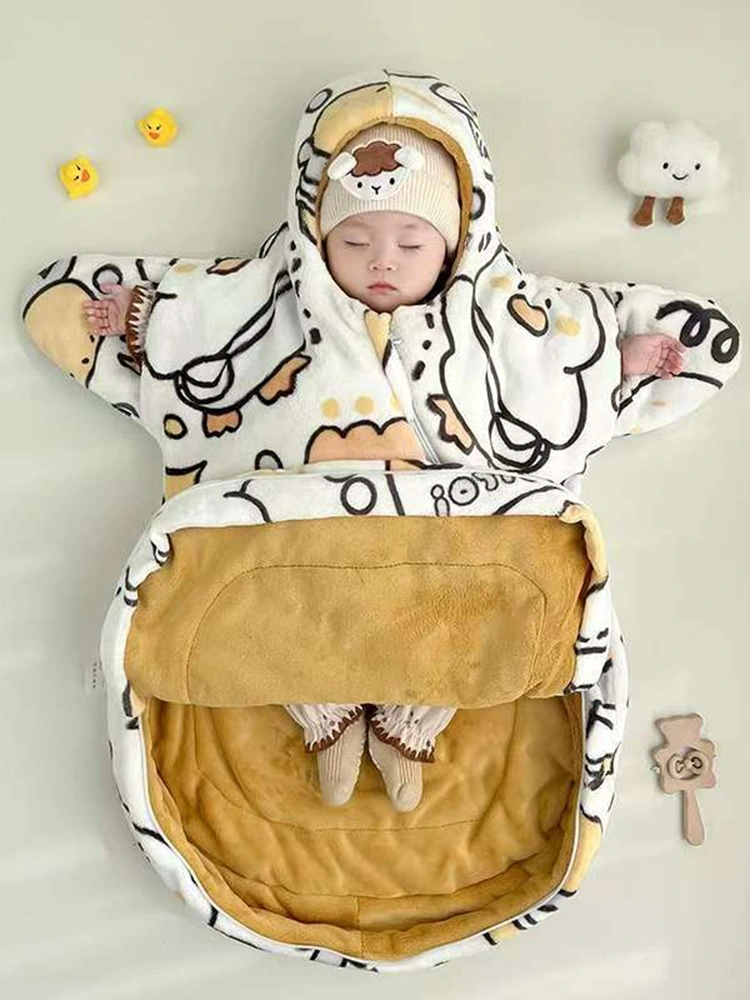

Keeping a baby warm during sleep is an important concern for parents, caregivers, and baby product buyers. A well-designed baby warm sleeping bag offers a wearable alternative to loose blankets, helping maintain a comfortable sleeping environment while allowing babies to move naturally. However, warmth alone is not enough. Fabric quality, breathability, sizing, construction, and practical details all influence the overall product experience.
This guide explores the essential features of a baby warm sleeping bag, explains how to evaluate different materials and designs, and highlights the factors that matter when selecting products for retail, distribution, or wholesale purchasing.
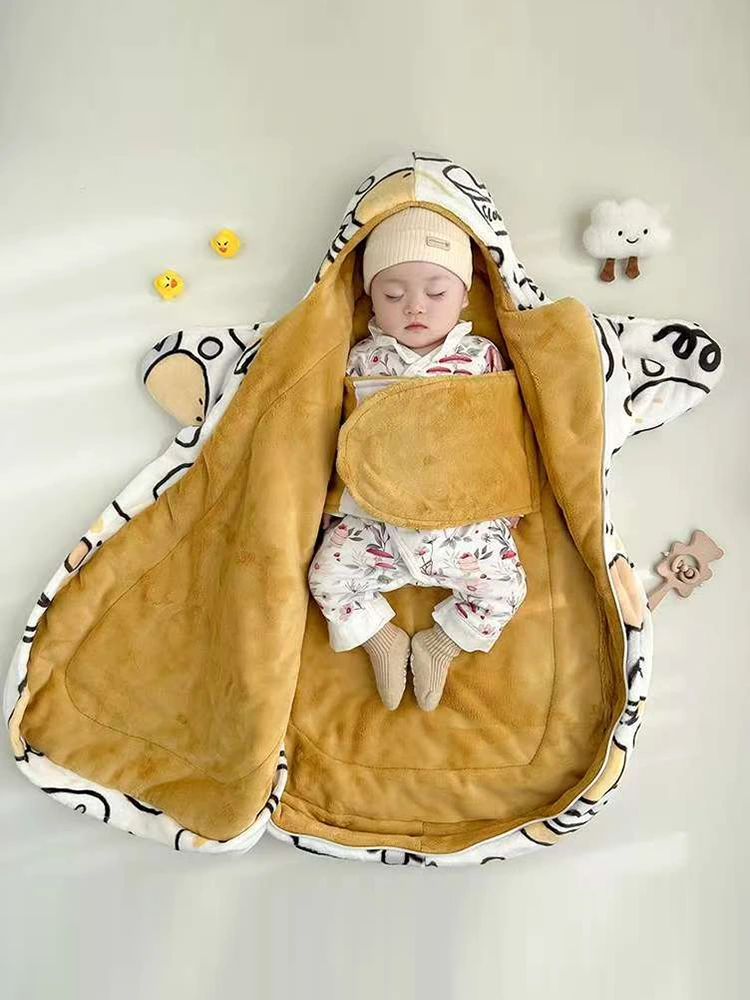
1. Why Is a Baby Warm Sleeping Bag Important?
Babies need a comfortable sleeping environment, but maintaining the right balance between warmth and ventilation can sometimes be challenging. Traditional loose blankets may shift during sleep, leaving a baby uncovered or creating unnecessary loose bedding in the sleeping area.
A baby warm sleeping bag is designed as wearable sleepwear. It surrounds the baby's body while leaving the head uncovered and, in appropriately designed models, allows the arms and legs to move freely. Unlike a conventional blanket, it is designed to stay in place as the baby moves.
Consistent Coverage During Sleep
One practical advantage of a sleeping bag is its wearable structure. Parents do not need to repeatedly reposition a loose blanket to maintain body coverage. This can make nighttime routines more convenient, especially during colder seasons.
Comfort Without Excessive Layering
A suitable sleeping bag can provide an additional layer of clothing without requiring multiple loose covers. The correct warmth level depends on room conditions, the baby's clothing, and the product's construction.
Convenience for Daily Routines
Sleeping bags are useful for bedtime routines, nighttime changes, and everyday nursery use. Their practical design makes them an attractive option for families looking for consistent and easy-to-manage sleepwear.
2. Which Features Matter Most in a Baby Warm Sleeping Bag?
Not all baby sleeping bags offer the same level of comfort or functionality. When comparing products, buyers should evaluate several important features rather than focusing only on appearance or thickness.
Comfortable materials help reduce irritation caused by rough surfaces and repeated contact with delicate skin.
Suitable fabric and construction help manage moisture and reduce unnecessary heat buildup.
Suitable filling and fabric weight help provide warmth according to the intended season and indoor conditions.
A properly sized design should provide secure neck and arm openings while allowing natural hip and leg movement.
Well-positioned zippers and closures can simplify dressing and diaper changes.
Reliable stitching, secure fasteners, and consistent workmanship support repeated everyday use.
These features work together. For example, a thick sleeping bag may appear warm but can be unsuitable for a heated bedroom. Similarly, attractive fabric is not enough if the neck opening is oversized or the seams are uncomfortable.
The best purchasing decision considers the complete product rather than one isolated specification.
3. Which Materials Are Suitable for Baby Sleeping Bags?
Fabric selection influences softness, breathability, insulation, durability, and maintenance. Manufacturers may combine different materials to achieve the desired performance for different seasons and product categories.
Cotton
Cotton is widely used in baby clothing because of its soft hand feel and familiar comfort. It is suitable for many lightweight and everyday sleeping bag designs. Its performance depends on fabric construction, thickness, and finishing.
Organic Cotton
Organic cotton is an option for brands targeting consumers who prioritize material sourcing and product transparency. Buyers should request relevant certification and supporting documentation rather than relying solely on marketing descriptions.
Polyester and Microfiber
Polyester fabrics are often selected for their durability, lightweight properties, and compatibility with different insulation structures. Microfiber fabrics can provide a smooth surface and soft touch, depending on their quality and finishing process.
Fleece
Fleece is commonly associated with soft, cozy textures and cooler-weather clothing. However, fleece products should be selected according to the actual room environment and overall thermal design to avoid excessive warmth.
Material Comparison
| Material | Main Characteristics | Potential Application |
|---|---|---|
| Cotton | Soft, familiar, versatile | Everyday and lightweight designs |
| Organic Cotton | Alternative fiber sourcing with certification options | Material-focused product collections |
| Polyester | Durable, lightweight, versatile | Outer fabrics and insulation structures |
| Microfiber | Smooth surface and soft texture | Comfort-oriented designs |
| Fleece | Soft, cozy, warm-feeling texture | Cool-weather product designs |
There is no single material that works best for every sleeping bag. Product developers should consider the target market, climate, intended age range, care requirements, and applicable safety standards before finalizing fabric specifications.
4. How Can Parents Choose the Right Warmth Level?
One of the most common concerns when purchasing a baby warm sleeping bag is determining how warm it should be. A product that is too lightweight may not provide the intended comfort in a cool room, while an overly insulated product may cause overheating in a warm environment.
Consider the Bedroom Temperature
The indoor environment is more important than outdoor weather alone. A cold winter day does not necessarily mean a baby needs a heavily insulated sleeping bag if the bedroom is well heated.
Understand TOG Ratings
TOG, or Thermal Overall Grade, is a measurement used to describe the thermal resistance of fabrics and bedding products. In baby sleeping bags, TOG ratings can help consumers compare different warmth categories.
However, a TOG number should not be treated as a universal room-temperature instruction. Parents should follow the manufacturer's specific guidance, consider the baby's clothing underneath, and monitor the baby's comfort.
| Product Category | Typical Characteristics | Purchasing Considerations |
|---|---|---|
| Lightweight | Light fabric and minimal insulation | Warm indoor environments |
| Medium Weight | Balanced fabric and insulation | Moderate indoor conditions |
| Warmer Design | More substantial insulation | Cooler rooms, with careful temperature assessment |
Watch for Signs of Overheating
Parents should check the baby's chest or back rather than relying only on hands and feet. Sweating, flushed skin, or a noticeably hot chest may indicate that the baby is too warm.
Indoor hats and excessive clothing layers should be avoided. A sleeping bag should never be combined with additional loose blankets, and weighted infant sleep products should not be used.
5. Why Does Proper Sizing Matter?
Size selection is essential for both comfort and product safety. A sleeping bag should not be chosen simply because it offers extra room for future growth.
Neck and Arm Openings
The neck opening should be appropriately fitted so that the baby cannot slip down inside the sleeping bag. Arm openings should also be designed to maintain a suitable fit without restricting comfortable movement.
Length and Movement
The sleeping bag should provide sufficient space for natural leg and hip movement. A design that is too restrictive may make the baby uncomfortable, while an excessively large design may create fit-related safety concerns.
Check the Manufacturer's Size Chart
Age labels alone are not always sufficient because babies grow at different rates. Buyers should review the recommended weight range, body length, garment measurements, and the manufacturer's fitting instructions.
6. Which Design Details Improve Everyday Convenience?
Small construction details can make a significant difference in the daily experience of parents and caregivers. A well-designed sleeping bag should be easy to use without compromising fit or comfort.
Convenient Zipper Design
Zippers can make dressing and diaper changes easier, particularly when the product is designed with a suitable opening direction. A protective zipper guard can help prevent direct contact between the zipper and the baby's skin.
Buyers should inspect zipper smoothness, durability, stitching around the zipper area, and the security of the zipper pull.
Practical Shoulder Closures
Some sleeping bags use shoulder snaps or adjustable closures to simplify dressing. These components should be securely attached and selected according to the intended product design.
Comfortable Neckline and Armholes
Careful edge finishing helps reduce friction around sensitive areas. The garment should maintain its shape during ordinary use and laundering.
Attractive Colors and Patterns
Colors, prints, and decorative details also influence product appeal. Neutral shades, soft pastel colors, and playful patterns are common choices in babywear collections.
However, decorative components must be securely attached and must not introduce small detachable parts or other hazards.
7. How Can Buyers Evaluate Baby Sleeping Bag Quality?
For parents, quality is closely connected to comfort and everyday usability. For retailers, importers, and distributors, it also influences return rates, customer reviews, and brand reputation.
Inspect Fabric Quality
- Check fabric softness and surface consistency.
- Look for uneven dyeing, visible defects, or loose fibers.
- Confirm that fabric specifications match the approved sample.
- Request applicable material and chemical compliance documentation.
Evaluate Stitching and Construction
- Inspect seam strength and stitching consistency.
- Check whether zipper ends and stress points are reinforced.
- Look for loose threads and unfinished edges.
- Verify that closures remain secure during normal use.
Review Product Testing and Compliance
Baby products are subject to specific safety and regulatory requirements in different markets. Buyers should identify the applicable requirements before placing an order.
Depending on the destination market and product category, relevant evaluations may include flammability requirements, chemical restrictions, colorfastness, mechanical safety, labeling, and traceability.
For products intended for the US market, buyers should check applicable Consumer Product Safety Commission requirements. For European markets, relevant EU product safety and textile regulations should also be reviewed.
Testing should be conducted by appropriate qualified laboratories where required. Do not assume that a fabric certificate alone establishes the compliance of the complete finished sleeping bag.
8. What Should Wholesale Buyers Consider When Sourcing Baby Warm Sleeping Bags?
Wholesale sourcing involves more than comparing unit prices. A reliable purchasing process should consider product specifications, manufacturing consistency, delivery arrangements, and communication efficiency.
1. Define the Target Market
Different markets may have different seasonal requirements, preferred sizes, design trends, and regulatory expectations. Buyers should identify their primary customers before choosing product specifications.
2. Confirm Material and Construction Details
Prepare a clear product specification sheet covering fabric composition, fabric weight, filling, dimensions, closures, colors, labels, and packaging. This helps ensure that the quotation and production sample refer to the same product requirements.
3. Request Samples Before Bulk Production
A sample provides an opportunity to inspect fabric hand feel, construction, dimensions, appearance, and functional details. Any adjustments should be confirmed before mass production begins.
4. Evaluate Production Consistency
Buyers should establish clear quality inspection criteria and agree on acceptable tolerances for measurements, stitching, colors, and finished product appearance.
5. Compare the Total Purchasing Cost
Unit price is only one part of the purchasing decision. Buyers should also evaluate sample charges, packaging, transportation, import duties, lead times, inspection costs, and potential quality-related expenses.
| Purchasing Factor | Questions to Confirm |
|---|---|
| Fabric | What is the exact composition and weight? |
| Product Size | Are measurements consistent across sizes? |
| Customization | Can colors, prints, labels, and packaging be customized? |
| Quality Control | What inspection procedures are available? |
| Compliance | Which market-specific requirements apply? |
| Delivery | What are the production and shipping lead times? |
Why Work with a Professional Babywear Supplier?
A professional supplier can help buyers coordinate material selection, product specifications, sample development, and order requirements. Clear communication at every stage can reduce misunderstandings and support more predictable purchasing decisions.
Nantong Neizhiwai Clothes Co., Ltd. is the company brand featured in this article. When evaluating babywear sourcing opportunities, buyers can discuss their product requirements, preferred materials, design details, and order specifications with the company to determine whether the proposed product solution matches their business needs.
9. How Should a Baby Warm Sleeping Bag Be Maintained?
Proper maintenance helps preserve the fabric's appearance, softness, and construction. Before washing, always read the care label and follow the manufacturer's instructions.
Follow Washing Instructions
Different materials may require different washing temperatures and methods. Avoid assuming that all cotton, fleece, or polyester sleeping bags can be cleaned in exactly the same way.
Use Suitable Detergents
Use an appropriate detergent and follow the garment care instructions. Excessive detergent or unsuitable cleaning products may affect fabric feel and performance.
Dry the Product Correctly
Some products can be tumble-dried at a specified temperature, while others require air drying. Excessive heat may affect filling, fabric shape, or fastening components.
Inspect Before Each Use
Parents and caregivers should check for damaged seams, loose threads, broken zippers, or other signs of wear. Discontinue use if a product becomes damaged or no longer fits correctly.
10. Common Mistakes to Avoid When Choosing a Sleeping Bag
Even a visually attractive sleeping bag may not be suitable for everyday use if important product details are overlooked.
- Choosing by thickness alone: A thicker product is not automatically better. Consider room temperature and the complete clothing combination.
- Ignoring size recommendations: Oversized or undersized sleeping bags may create fitting and movement problems.
- Overlooking breathability: Fabric and construction should suit the intended indoor environment.
- Ignoring fastener quality: Poorly finished zippers and closures can reduce convenience and durability.
- Assuming all products meet the same standards: Requirements vary according to product design and destination market.
- Skipping sample evaluation: Bulk orders should not rely on product photos or descriptions alone.
- Adding loose blankets for extra warmth: A sleeping bag should be used according to its instructions without adding loose bedding to the baby's sleep area.
Taking time to review these details helps families select more appropriate sleepwear and helps commercial buyers make better-informed sourcing decisions.
11. Frequently Asked Questions About Baby Warm Sleeping Bags
Q1. What is a baby warm sleeping bag?
A baby warm sleeping bag is a wearable sleepwear product designed to cover a baby's body while leaving the head uncovered. It provides an alternative to loose blankets and is available in different materials, thicknesses, and designs.
Q2. Can babies sleep in a warm sleeping bag every night?
A properly fitted, non-weighted sleeping bag designed for infant sleep can be used as part of a safe sleep routine, provided its warmth level and design are appropriate for the baby and the room environment. Always follow the manufacturer's instructions.
Q3. How do I know if a baby sleeping bag is too warm?
Check the baby's chest or back. Sweating, flushed skin, and a hot chest may indicate overheating. Remove unnecessary layers and adjust the sleeping environment when needed.
Q4. Which fabric is best for a baby warm sleeping bag?
Cotton, organic cotton, polyester, microfiber, and fleece are common material options. The best choice depends on the intended season, fabric construction, breathability, softness, and product requirements.
Q5. What does TOG mean in baby sleeping bags?
TOG stands for Thermal Overall Grade. It measures thermal resistance and is commonly used to compare the warmth of sleeping bag products. Parents should follow the manufacturer's temperature and layering guidance rather than relying on the number alone.
Q6. How should a baby sleeping bag fit?
It should fit securely around the neck and arm openings without allowing the baby to slip inside. At the same time, it should provide enough room for comfortable hip and leg movement.
Q7. Are weighted baby sleeping bags recommended?
No. Weighted sleep sacks, weighted swaddles, and weighted blankets are not recommended for infants. Choose an appropriately sized, non-weighted product.
Q8. Can a baby wear a sleeping bag with a blanket?
Loose blankets should not be added to an infant's sleep space. Use the sleeping bag according to its intended design and adjust the baby's clothing layers appropriately.
Q9. What should wholesale buyers check before ordering?
Buyers should confirm fabric composition, dimensions, filling, construction, customization options, quality inspection procedures, applicable compliance requirements, minimum order quantities, and delivery schedules.
Q10. Can baby warm sleeping bags be customized for private labels?
Customization possibilities depend on the supplier's capabilities and order requirements. Buyers can discuss fabric choices, colors, prints, size specifications, labels, and packaging during product development.
12. Final Thoughts: Choosing a Baby Warm Sleeping Bag with Confidence
A good baby warm sleeping bag should combine suitable warmth, comfortable materials, breathable construction, secure sizing, and practical details. No single feature determines overall quality. The product must work as a complete system that meets the intended user's needs and the requirements of the target market.
For parents, understanding fabric, fit, room temperature, and safe sleep recommendations makes product selection easier. For retailers, distributors, and wholesale buyers, reviewing specifications, samples, quality standards, and supplier capabilities is essential for building a dependable babywear collection.
Nantong Neizhiwai Clothes Co., Ltd. welcomes business inquiries from buyers interested in discussing babywear product requirements and potential sourcing opportunities. Clear specifications and professional communication are important starting points for developing products that meet market expectations.
Looking for a Reliable Baby Sleeping Bag Supplier?
Searching for baby warm sleeping bags that meet your market requirements? Discuss your preferred materials, sizes, designs, and customization needs with Nantong Neizhiwai Clothes Co., Ltd.
Whether you are developing a new babywear collection or sourcing products for wholesale distribution, we welcome the opportunity to learn about your project.
Contact Us